
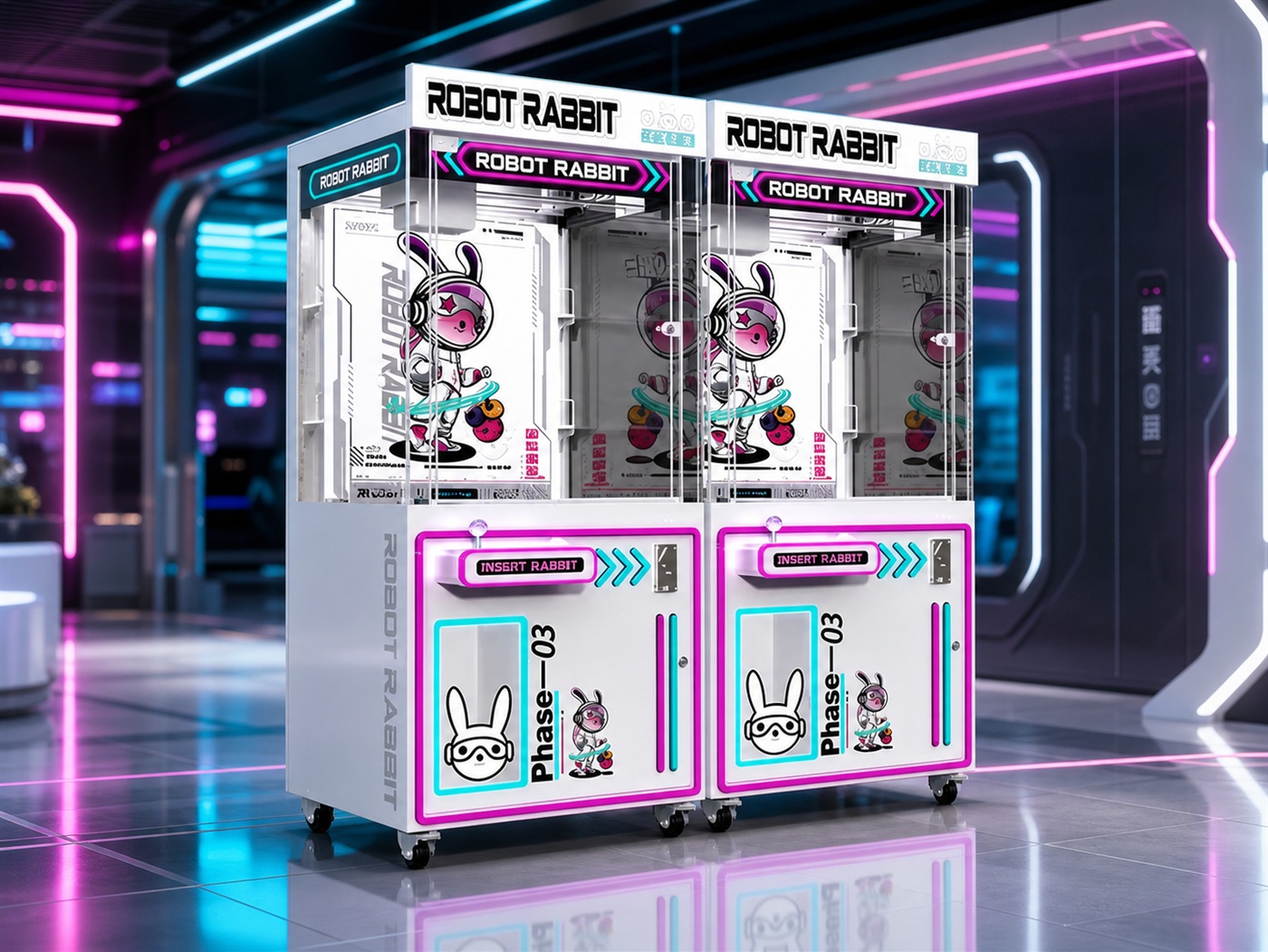
The role of claw machines is changing. They are no longer viewed only as traditional toy-catching games. In many modern venues, claw machines combine entertainment, prize retail, visual merchandising and social-media-friendly design.
The Robot Rabbit Claw Machine reflects this development through its clean metal cabinet, transparent prize chamber and distinctive cyan-and-magenta lighting. Its futuristic appearance allows it to function as both an amusement machine and a visual feature within shopping malls, arcades and entertainment venues.
Why Visual Design Matters
Customers often notice a prize machine before they understand its gameplay. Cabinet lighting, prize visibility, character graphics and machine placement all influence the first impression.
A transparent prize area allows operators to present merchandise clearly. LED lighting helps highlight the prizes and strengthens the appearance of the venue, especially in locations with dark or technology-themed interiors.
The Robot Rabbit theme gives the machine a recognisable personality without limiting it to one type of prize. Operators may use the cabinet for:
- Plush toys
- Blind boxes
- Collectible figures
- Fashion accessories
- Promotional merchandise
- Seasonal gifts
- Branded souvenirs
- Small electronic products
This flexibility allows the prize mix to be adjusted according to customer age, local preferences, holidays and promotional campaigns.
Claw Machines as Part of the Venue Experience
Modern FECs compete through complete guest experiences rather than individual attractions. A coordinated prize machine zone can support the venue’s visual identity and provide a natural transition between arcade games, redemption counters and retail areas.
Several machines can be installed together to create a stronger presentation. Different prize categories, cabinet colours or difficulty settings can be used to encourage customers to explore the entire zone.
The machines can be placed in:
- Family entertainment centers
- Shopping malls
- Arcades and game centers
- Cinemas
- Restaurants
- Hotels and resorts
- Theme parks
- Retail and lifestyle stores
- Tourist attractions
- Exhibition and event spaces
Payment Technology and Operating Flexibility
The continued adoption of game cards, RFID wristbands, QR payments and mobile wallets is changing how amusement venues manage customer spending. These systems can simplify the playing process, reduce coin handling and help operators adjust prices or promotions more efficiently.Embed无现金运营趋势
Depending on the target market, claw machines may be configured with coin acceptors, bill acceptors, card readers, QR payment devices or combined payment systems. Operators should also consider claw strength adjustment, game duration, prize size, merchandise cost and expected customer profile when setting up the machine.
Merchandising and Daily Management
A successful prize machine requires more than attractive equipment. Prize arrangement, lighting, machine cleanliness and regular replenishment influence customer interest.
Operators should:
- Keep prizes clearly visible
- Avoid overcrowding the prize chamber
- Place higher-value prizes in prominent positions
- Rotate prizes according to seasons and trends
- Check claw movement and strength regularly
- Maintain clean glass and bright cabinet lighting
- Review payment and play data when available
These details can help maintain the machine’s appearance and improve the consistency of the customer experience.
Customization for Distributors and Venue Brands
For distributors, arcade chains and entertainment projects, OEM/ODM customization can create stronger market differentiation. Robot Rabbit claw machines can support customized cabinet colours, character graphics, logos, lighting programs, prize settings, voltage, plug standards, payment systems and packaging.
Guangzhou Yixin provides product selection, appearance customization, production coordination, testing and worldwide shipping support. Whether the project requires a single sample machine or a complete prize machine zone, the configuration can be planned according to the venue’s positioning and operating model.